I’ve made a lot of improvements since I last shared my string-spinning process, so it’s time for a new process post! :^)
Preparation
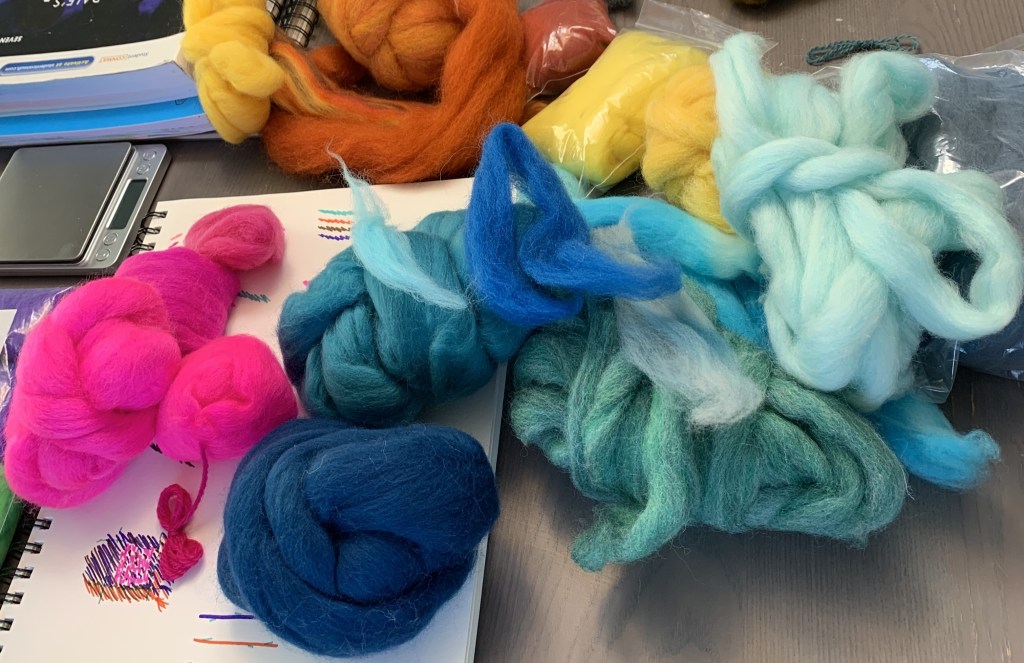
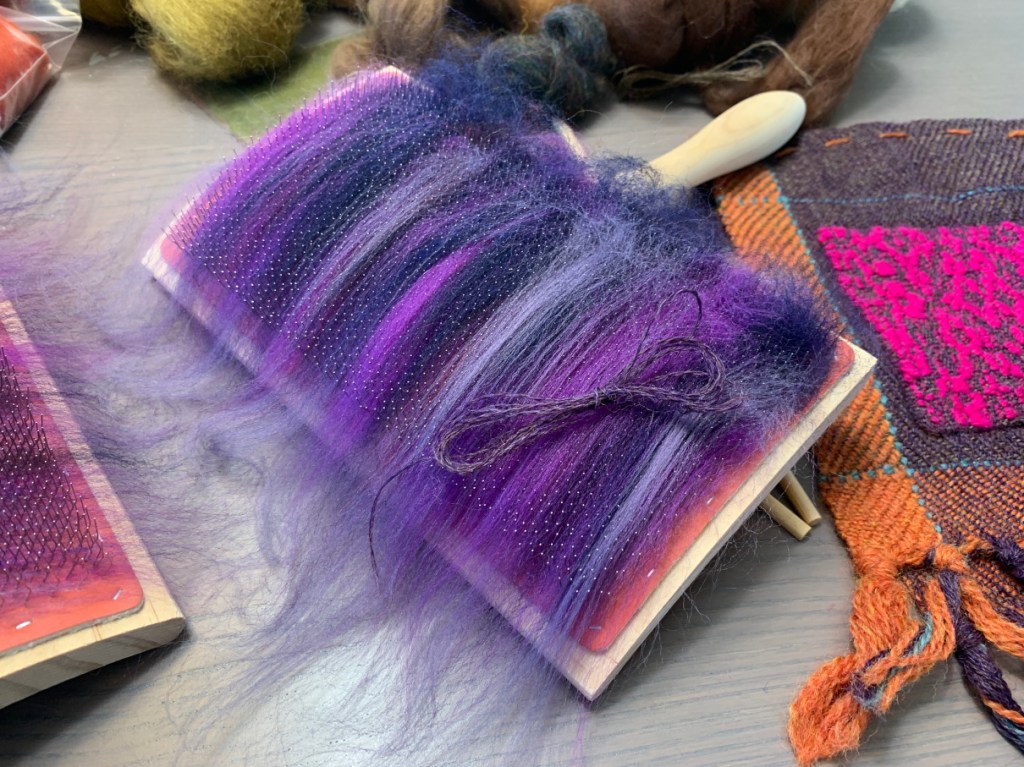
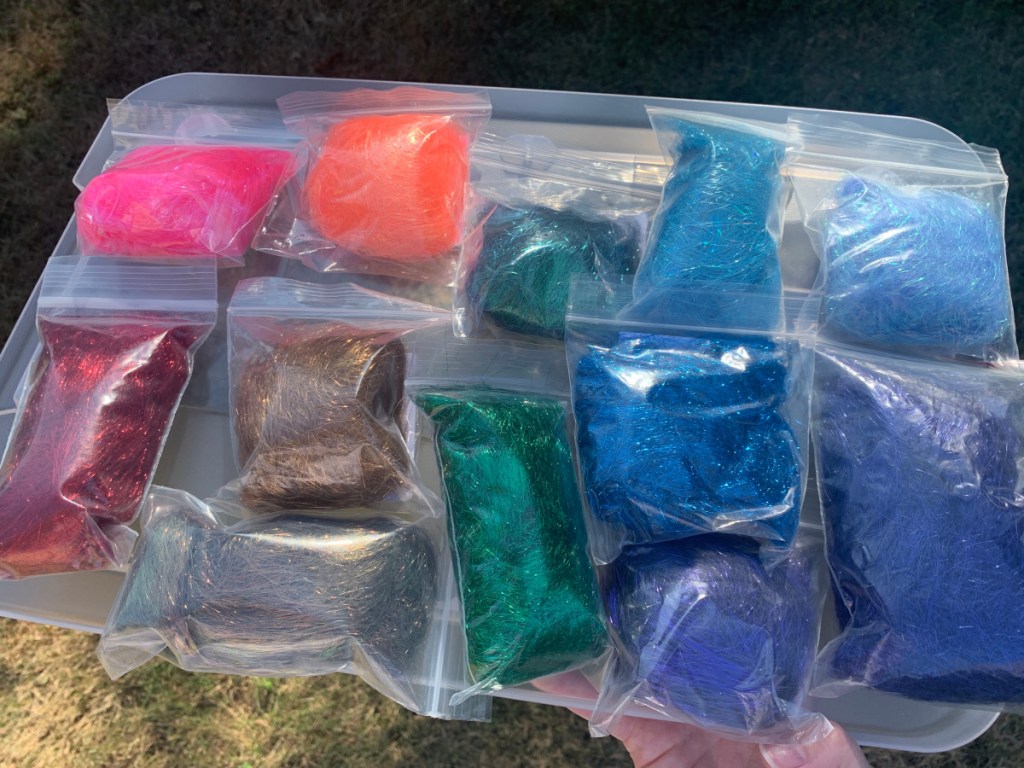
It all starts with fiber! From a farm, indie dyer, or craft supply, I usually get it as roving or top (cleaned, combed, and loosely organized into a rope shape). I fluff, strip, and attenuate it to help it spin smoothly.
Variations:
- Different fibers have different prep needs- wool roving just needs a little pre-drafting, while raw cotton needs to be cleaned, carded, and rolled.
- For custom color sets, I’ll do some design sketches and spin up a test string as well.
- Sparkles & custom colors have an extra step of blending the fibers using hand cards.
- If the fiber is dyed in a multicolor pattern, this step affects how the dye pattern will show up in the finished strings.
Spinning
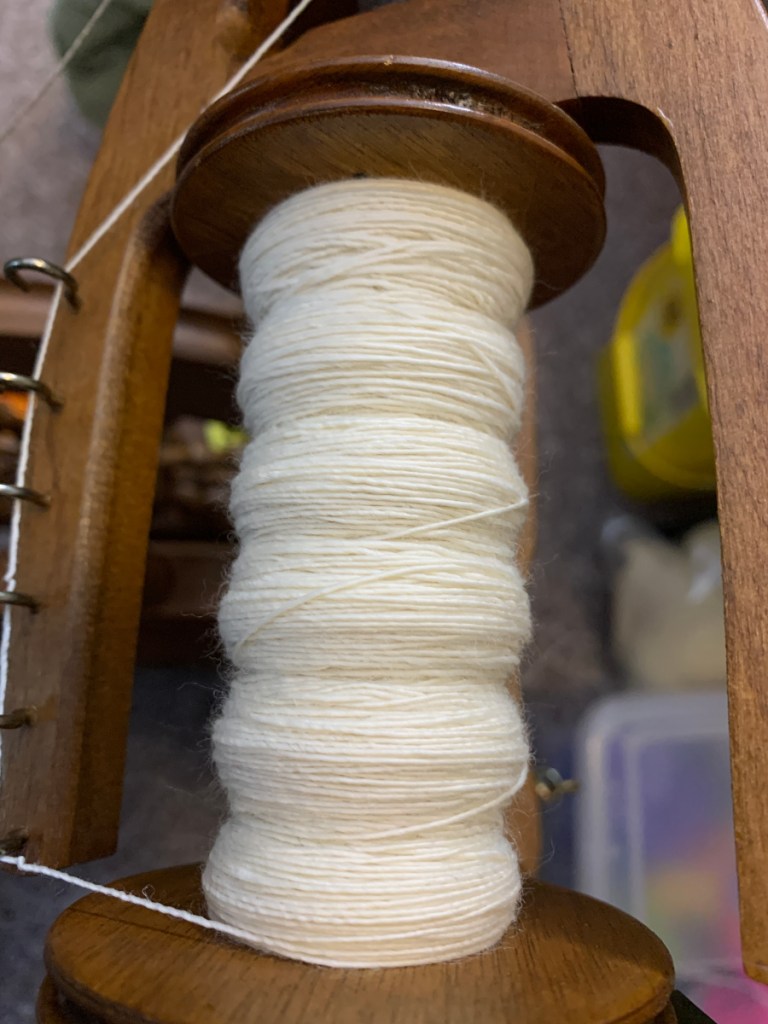
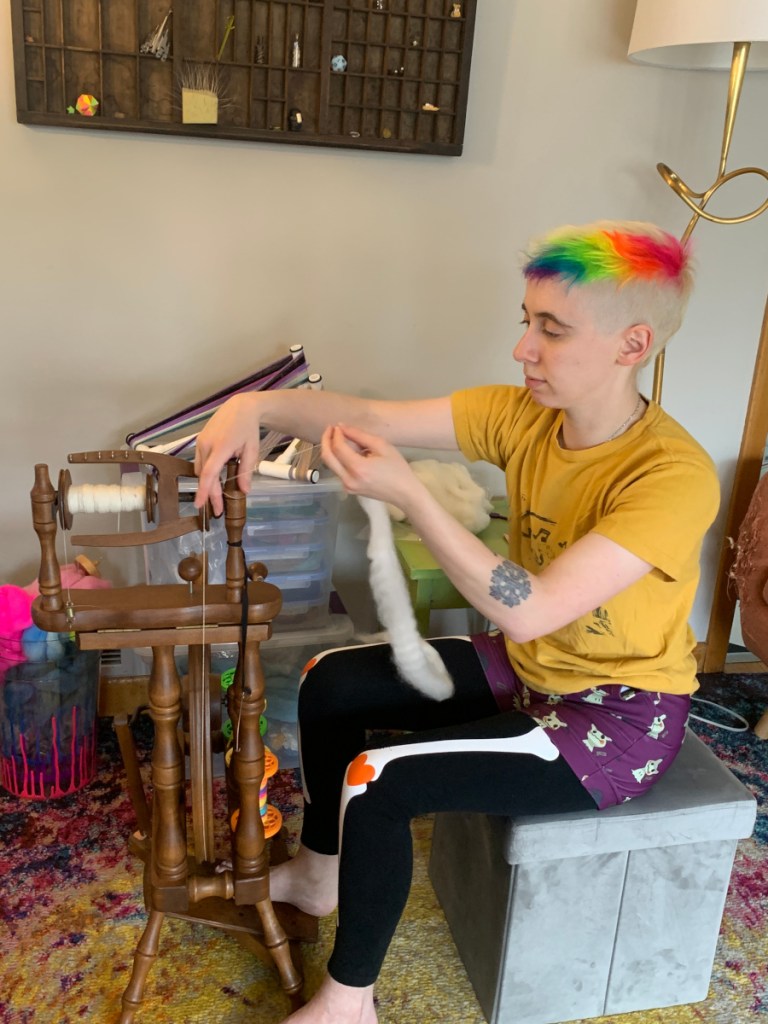
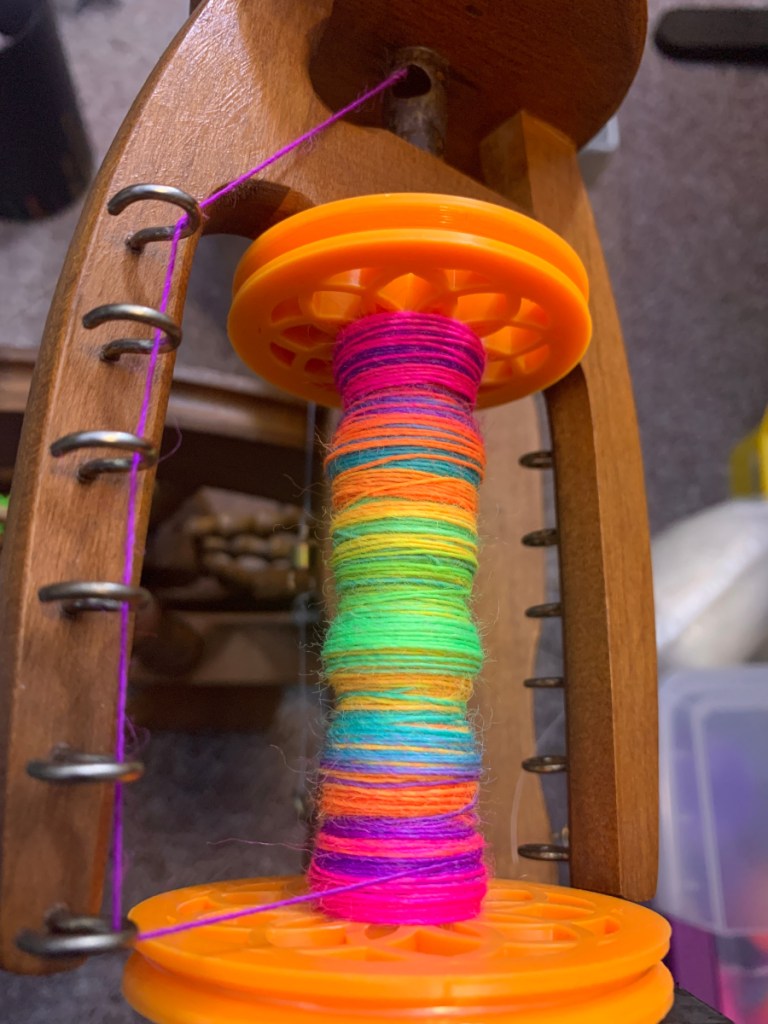
With a “l’shem mitzvat tzitzit”, I sit down at my wheel and start spinning! My usual spinning style for tzitzit is worsted with a short backward draw. This helps make the string dense and smooth. The width of the spun singles is usually around 30 WPI.
Fun fact:
- My wheel’s name is Artie! She’s an Ashford Traveller MK-2, and she’s older than I am.
~Rest~
There’s a lot of kinetic (and spiritual) energy in this single thread! I let it rest for a week so the energy can settle. This also helps the plying go more smoothly.
Plying
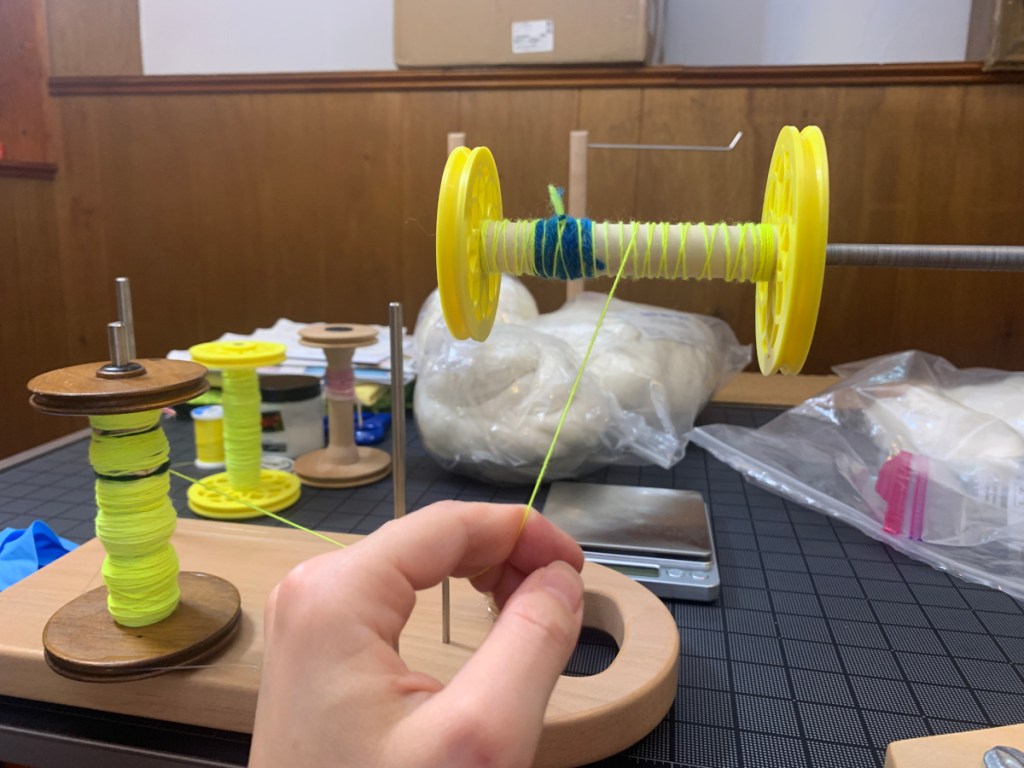
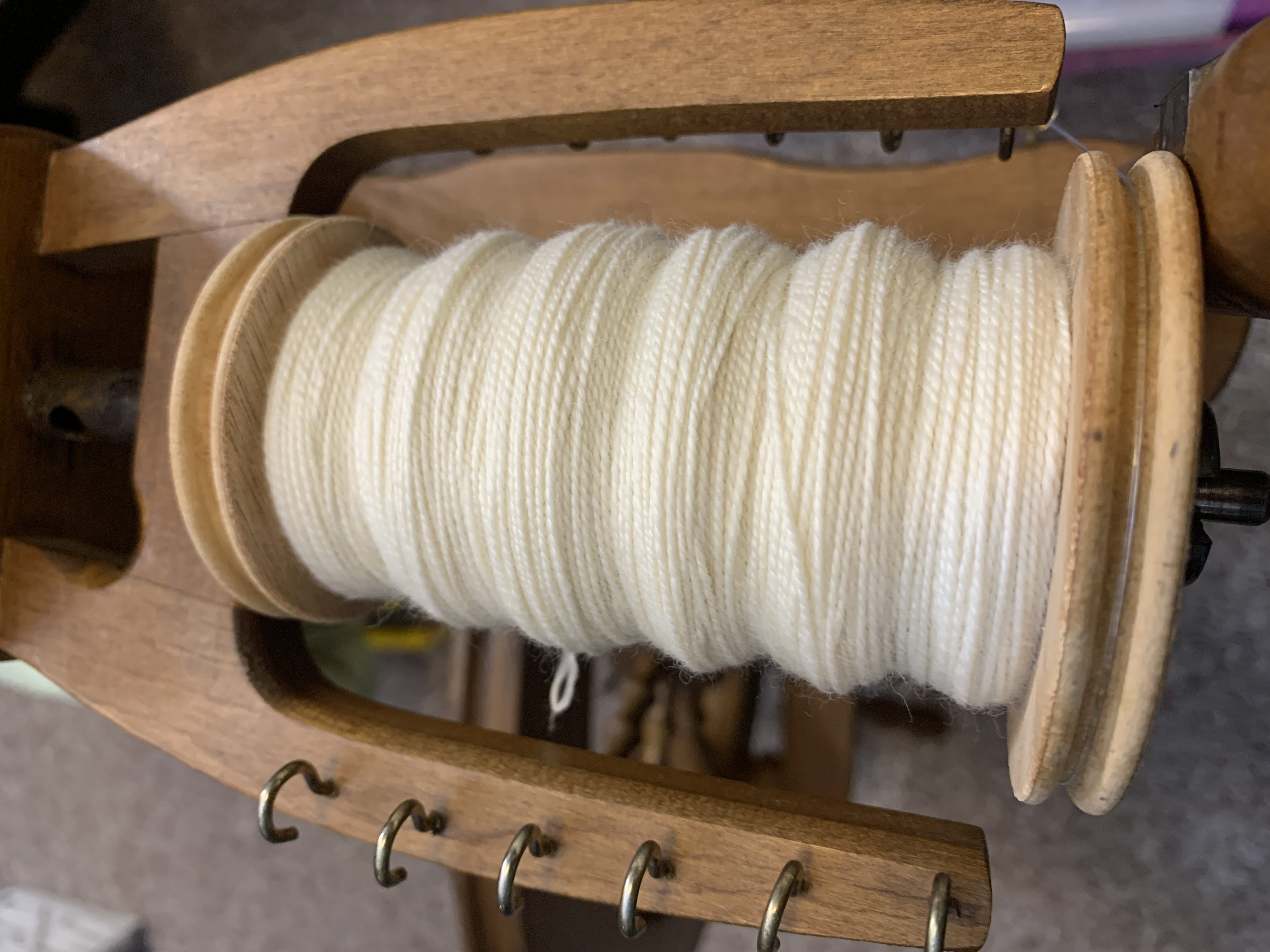
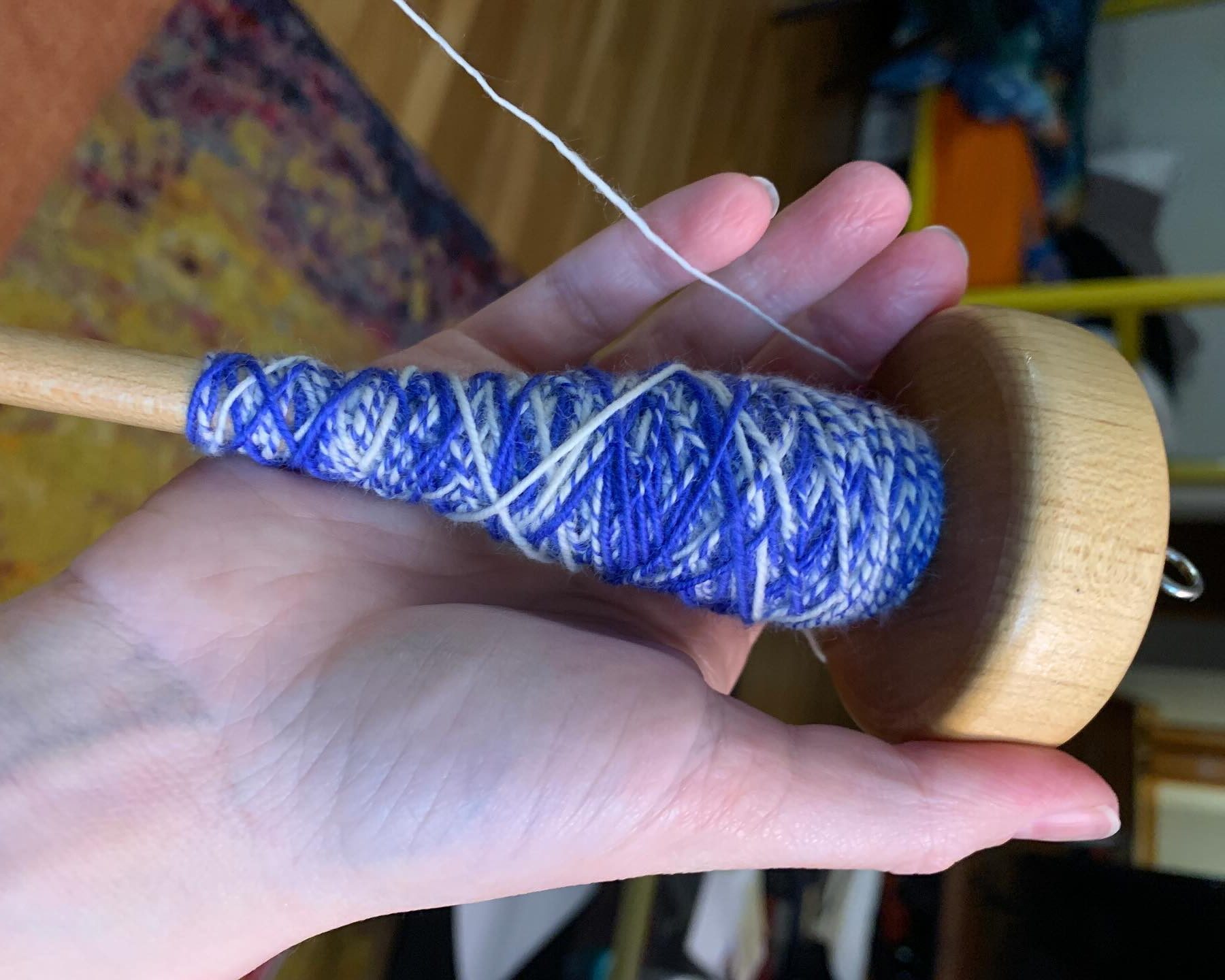
I weigh the single thread, then split it in half, rewinding each half onto a transfer bobbin. After that, I put the two bobbins on my lazy kate and start plying! The width of the plied string is usually around 18 wpi.
Variations:
- For a small amount of string, I’ll just rewind into balls and ply on a drop spindle.
- For gradient colors, I chain ply with one single to preserve the dyed color pattern.
~Rest again~
Time to let the energy settle in the other direction.
Finishing
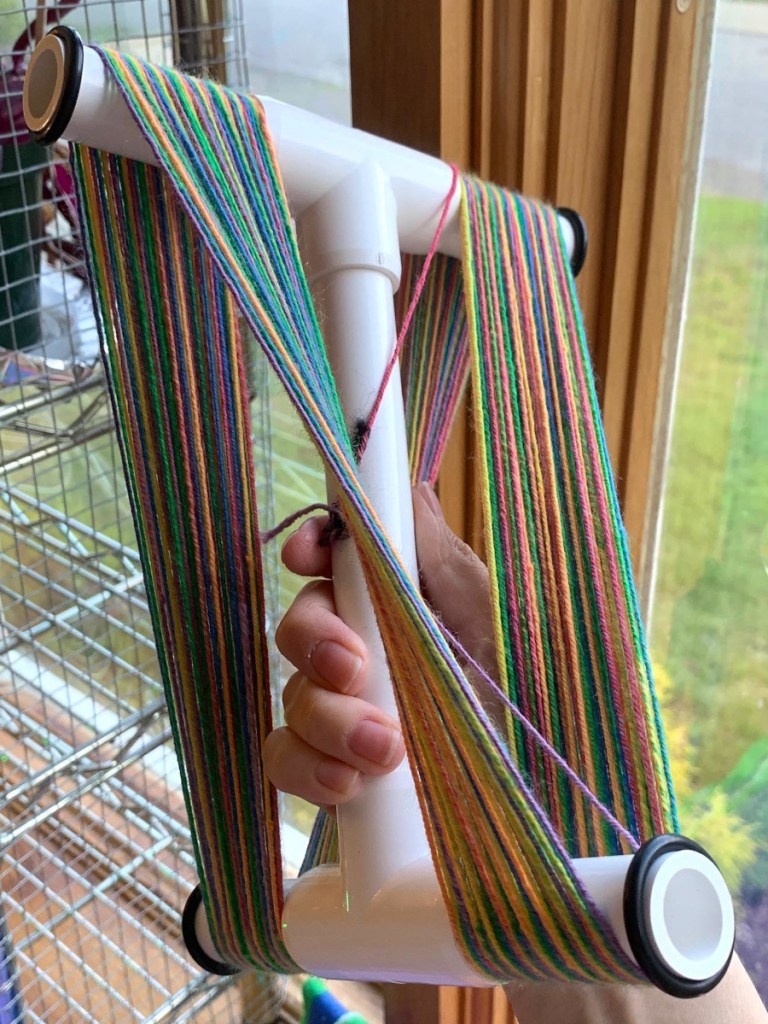
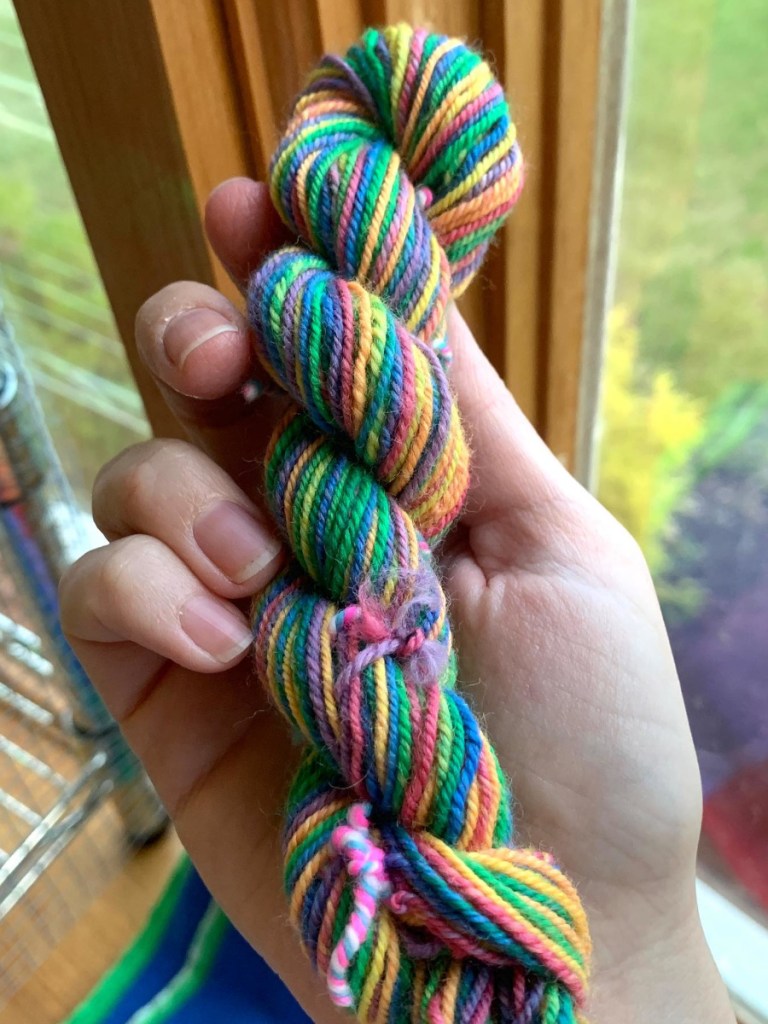
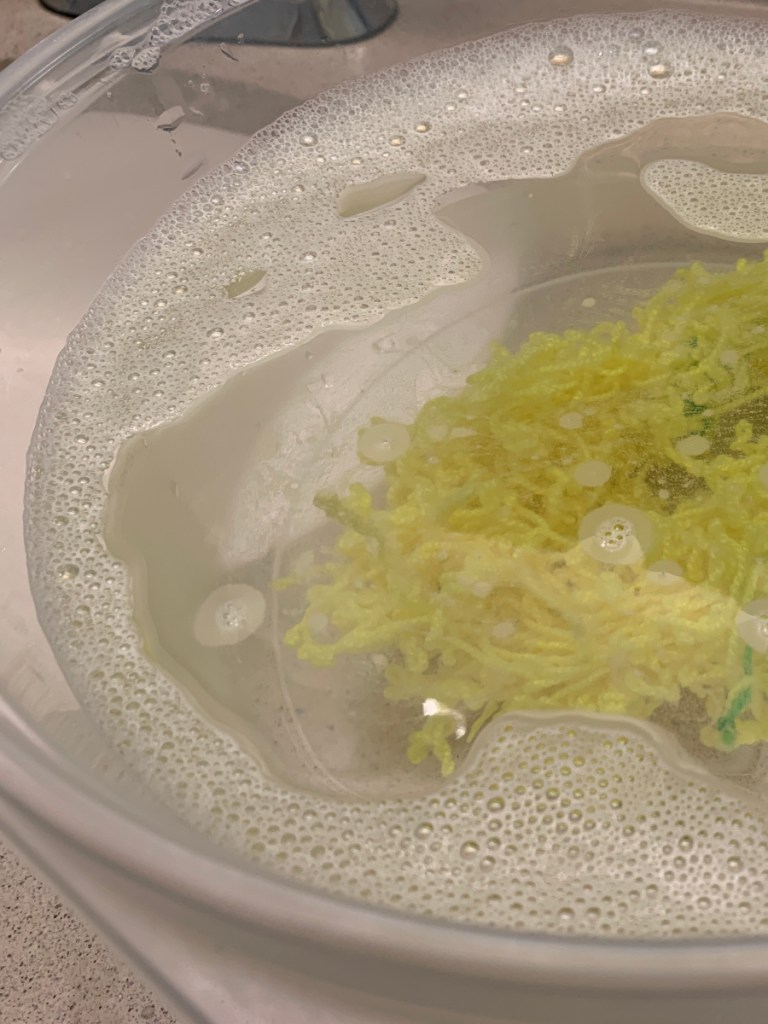
Once it’s done resting, I use a niddy noddy to skein the string and add lease ties so it doesn’t tangle up. The skein gets a soak in its own little mikveh (bucket of warm water and wool wash). After taking it out, I snap it between my arms to even it out and help it hold together. Then it’s back onto the niddy to dry under tension!
Fun fact:
- The lease ties are made of scraps from previous batches of tzitzit string.
Packaging
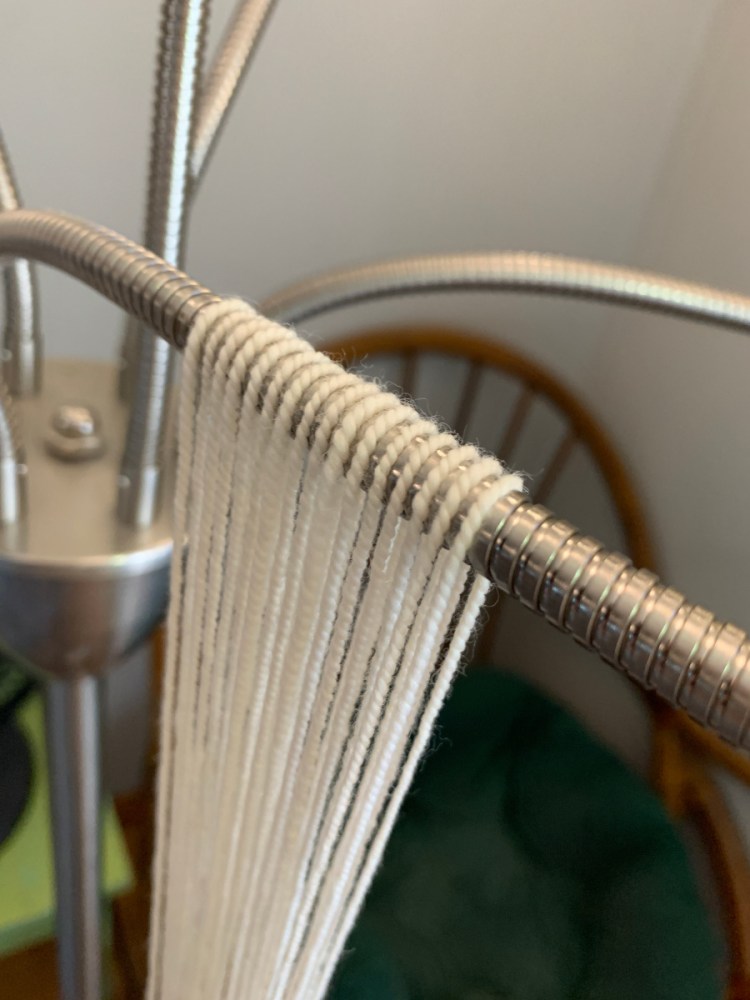

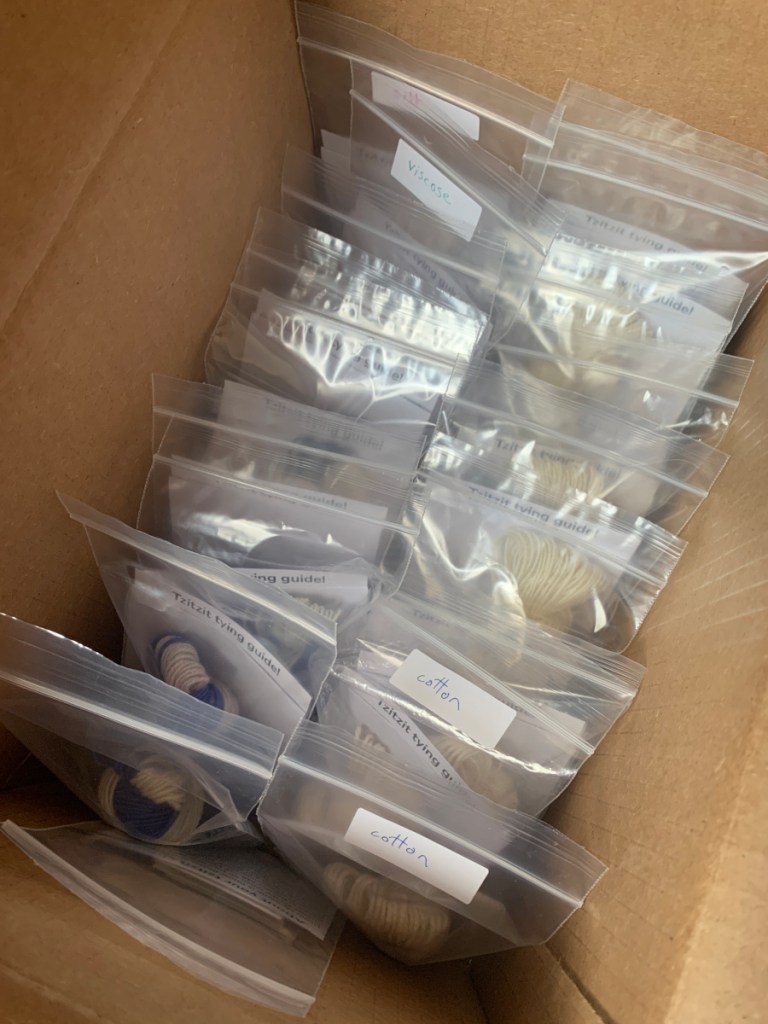
I put the new skein of tzitzit string onto my swift for easy unreeling, then cut it into 12′ bundles. From those 12′ bundles, I make twelve 36″ lengths for the main strings, and four 72″ lengths for the shamashim, for a complete set of tzitzit strings. I loosely tie the set together, put it in a little bag with a tying guide, and send it off!
Variations:
- Strings can also be cut to different lengths, or not at all (just one big skein)
- Different goodies or packaging (stickers, business cards, all in one bag, etc.)
And that’s it! Thanks for coming with me on this journey. :^)
 Fury Wren